
Japan Journalist Visa for Foreign & Freelance Reporters
Japan Journalist Visa for Foreign & Freelance Reporters
We help reporters, photographers and freelance journalists working under contracts with foreign news organizations prepare applications for Japan's “Journalist” status of residence.
Based in Yamagata, Japan. Online and email enquiries accepted from throughout Japan and overseas. 日本語ページ / Japanese-language guide
Eligibility
Review your reporting activity
We examine the proposed assignments, the foreign media organization and the type of contractual relationship.
Freelancers
Support for assignment-based work
We review commission letters, freelance agreements and variable remuneration on a case-by-case basis.
From abroad
Plan your application route
We assess the available COE and visa procedures, including who is legally able to submit an application in Japan.
What is Japan's Journalist Visa?
“Journalist” (報道 / Hōdō) is a Japanese status of residence for news coverage and other journalistic activities carried out under a contract with a foreign journalistic organization. Typical examples include reporters and news photographers working for overseas news organizations.
Although people often call it a “Journalist Visa,” the visa issued by a Japanese embassy or consulate and the status of residence granted for activities in Japan are not the same document. For a planned medium- or long-term stay, the application route commonly involves a Certificate of Eligibility (COE), followed by an overseas visa application where required.
The key question is not simply whether you are a journalist. Your intended activities in Japan and your contract with a qualifying foreign news organization must be examined together.
Potentially relevant roles
What needs closer examination?
Can Freelance Journalists Apply for a Japan Journalist Visa?
Potentially, yes. The Immigration Services Agency of Japan expressly provides a document category for people undertaking journalistic work under a non-employment contract with a foreign news organization, including freelancers. You do not necessarily have to be a salaried employee of a newspaper or broadcaster.
However, freelance status alone is not enough. What matters is whether your actual work and supporting evidence establish qualifying journalistic activities under the relevant foreign-media contracts.
Common freelance arrangements
You may receive separate assignments from one or more magazines, newspapers or media organizations. Payment may be made per article, interview, photograph or video rather than as a fixed monthly salary.
These arrangements call for careful documentation; they are not automatically accepted or rejected solely because the payments vary.
How to document the relationship
For an applicable freelance agreement, immigration materials should explain the nature of the activity, the period, the professional position or role, and remuneration. If a contract omits one of these items, a document prepared by the relevant foreign news organization may be required.
Past commissions, invoices, payments and published work may help explain the relationship, but they do not necessarily replace the required contract evidence.
Important: Being a freelance writer, independent video creator or self-publisher does not by itself establish eligibility for “Journalist” status. Activities conducted without a qualifying foreign news organization contract may require a different immigration assessment.
Freelance journalists with irregular income
If you do not receive a guaranteed monthly salary, it is especially useful to explain how assignments are obtained, the remuneration for each assignment, the continuity of the relationship and the work you plan to undertake in Japan. A series of isolated past assignments does not by itself prove that there is a qualifying arrangement for your future activities in Japan.
We can review the facts and help identify documents that may clarify the arrangement. The decision on the application remains with Japan's immigration authorities.
Journalist Application Categories
The Immigration Services Agency separates supporting documents for Journalist applications into Category 1 and Category 2. The category affects which documents are normally required.
| Category | General description | Typical evidence |
|---|---|---|
| Category 1 | Employees of a foreign news organization that employs an individual who has been issued a Foreign Press Registration Card by the Press Secretary of Japan's Ministry of Foreign Affairs. | Documentation showing the relevant organization meets the category requirement. |
| Category 2 | Organizations and individuals not falling within Category 1, including relevant freelance contractual arrangements. | Evidence of the assignment or contract and information about the foreign news organization, depending on the case. |
A Foreign Press Registration Card is relevant to Category 1 classification. It is not a blanket prerequisite for every Journalist applicant. The official document requirements differ depending on the application type and the facts.
Documents Commonly Considered for Journalist Applications
The exact list differs for a COE, change of status and extension, and between Category 1 and Category 2. The following is an orientation guide, not a substitute for the current official checklist.
Core application items
Foreign media and assignment evidence
Translation rule: Foreign-language documents submitted to the Immigration Services Agency must be accompanied by Japanese translations. Documents issued in Japan generally must be dated within three months of their issue when submitted, where that rule applies. Additional materials can be requested during examination.
Applying from Abroad, Changing Status, or Extending Your Stay
Before arriving
Certificate of Eligibility (COE)
For an overseas journalist planning a qualifying medium- or long-term stay, a COE is a common route. After issuance, a visa application is generally made at the relevant Japanese embassy or consulate.
We first check who is permitted to submit the COE application in Japan. This is particularly important for freelancers with no Japan-based employer or receiving organization.
Already in Japan
Change of Status of Residence
If you already have another status of residence and plan to undertake qualifying journalistic activities, a change-of-status application may be needed before beginning work that is not authorized by your current status.
The correct timing and available procedure depend on your existing status and circumstances.
Continuing your work
Extension of Period of Stay
For journalists continuing to work under the same status, an extension application is required before the authorized period expires. Evidence of continuing contracts and, for Category 2, applicable income and resident-tax documents may be required.
Changes to the media organization or contract can lead to additional document requirements.
The available periods of stay under “Journalist” are five years, three years, one year or three months. Immigration authorities determine the period granted; it cannot be promised in advance.
How Our Administrative Scrivener Office Can Help
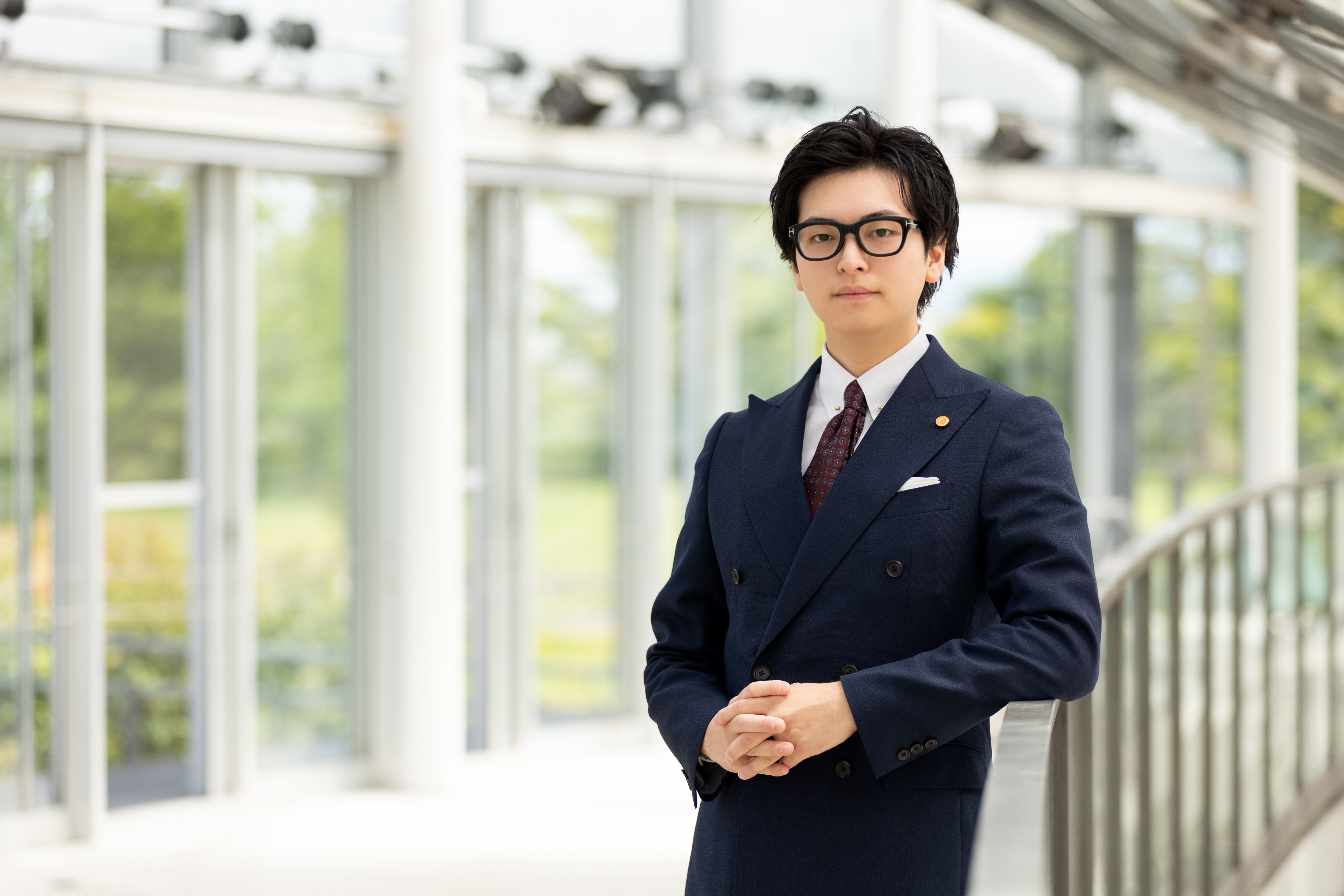
Masanobu Kawagoe
Kawagoe Masanobu Administrative Scrivener Office
Representative Gyoseishoshi / Application Intermediary
Gyoseishoshi Registration No. 23071191
Sagae City, Yamagata Prefecture, Japan
In Japan, a licensed Gyoseishoshi (administrative scrivener) may prepare immigration applications and supporting documents. An authorized application intermediary can also handle eligible submissions, subject to the procedure and applicable rules. A Gyoseishoshi is not the same professional qualification as a Bengoshi (attorney-at-law).
Case assessment
Review the type of reporting, the foreign news organization's role, current or intended contracts and possible application categories.
Document preparation
Organize an individual evidence checklist, prepare application documents and clarify missing information in contracts or explanatory materials.
Application support
Assist with eligible filings as an application intermediary where legally available, or explain the appropriate filing route and any required participant.
Remote coordination
Discuss documents and next steps by email or online communication with journalists and, where relevant, foreign media representatives.
Our Japan Journalist Visa Application Fees
The fees below are based on our published Journalist application service rates. All amounts are in Japanese yen and include Japanese consumption tax.
| Type of application | Professional fee (including tax) |
|---|---|
| Certificate of Eligibility (COE) — Journalist | From ¥110,000 |
| Change of Status of Residence — Journalist | From ¥110,000 |
| Extension of Period of Stay — no major change in media organization or contract | From ¥44,000 |
| Extension of Period of Stay — media organization or contract changed, etc. | From ¥110,000 |
What is not necessarily included? Government fees (where applicable), translations, certificates, postage, transportation and other actual expenses may be charged separately. Complex contracts, substantial explanatory documents and unusual circumstances may affect our professional fee. We provide an individual quotation before you decide to engage our office.
What Happens After You Contact Us?
Tell us about your work
Describe your nationality, location, foreign media clients, reporting activity in Japan, contracts and anticipated dates.
Initial assessment
We review your situation, possible status of residence, application route and any major evidence questions.
Scope and quotation
We explain the proposed service, responsibilities, supporting documents and fees before formal engagement.
Documents and filing
We coordinate the agreed preparation and, where permitted, support the submission and any follow-up document requests.
Frequently Asked Questions About Japan's Journalist Visa
Can a freelance journalist qualify without a fixed monthly salary?
Potentially. The official Journalist document requirements recognize non-employment arrangements with foreign news organizations. Assignment-based remuneration must be explained through the relevant contract or related documents. Neither freelance status nor a history of published articles guarantees approval.
I work for several overseas magazines. Can multiple clients be considered?
Multiple relationships can be reviewed individually. We would examine each contracting organization, the assignments planned in Japan and whether the arrangements establish activities falling under the Journalist status of residence. Multiple publications alone do not establish eligibility.
Are commission letters or emails enough if I have no long-term employment contract?
The official documentation calls for evidence of a non-employment contract where applicable, including information about activities, duration, position and remuneration. Whether a commission letter, written agreement and supporting documents adequately establish the relationship depends on their content. An email exchange should not automatically be assumed sufficient.
Can I apply from outside Japan if I have no Japanese employer?
You can contact us from overseas. However, the eligibility of your work and the legal arrangements for filing a COE application in Japan are separate questions. We need to establish who, if anyone, is authorized to submit the COE application and whether another visa application route should be considered.
Do I need a Foreign Press Registration Card?
Not every applicant falls into Category 1, which involves a foreign media organization employing a person issued such a card by Japan's Ministry of Foreign Affairs. Category 2 also exists, with different document requirements.
Does running a YouTube channel or personal publication qualify?
Not automatically. The central requirement is journalistic activity under a contract with a foreign journalistic organization. Purely independent content creation without such a relationship may fall outside this status.
What if I work only for a Japanese media organization?
The Journalist status is defined by activities based on a contract with a foreign journalistic organization. If you have only a Japanese media contract, another status of residence may need to be examined depending on your circumstances.
Can I submit English-language contracts without translation?
Documents submitted in a foreign language generally require Japanese translations for immigration filing. We can advise on which documents may need translation and whether translation services would involve additional fees.
Can you guarantee that I will receive a Journalist visa?
No. Decisions on status of residence are made by Japan's Immigration Services Agency and visas are issued by the relevant Japanese diplomatic mission. We provide procedural and document support but cannot guarantee a favorable decision.
Can I make an enquiry in English?
Yes. You may send your initial enquiry in English through our contact form. The contact form itself currently has Japanese field labels, and the guide below explains them.
How to Contact Us in English
When you use our contact form, you can write your enquiry in English. You do not need a Japanese phone number to make an initial enquiry.
Japanese form labels
お名前: Your name (required)
メールアドレス: Your email (required)
電話番号: Your phone number (optional)
ご相談内容: Your message (required)
Useful details for your first message
For security, avoid submitting sensitive original documents or unnecessary personal identifiers through an initial enquiry. We can discuss document-sharing arrangements if you engage our office.
Official References and Related Information
The following links lead to government guidance or to other relevant information on our website. The Immigration Services Agency may revise its forms and document requirements, so the latest official information should always be checked before filing.
Considering Journalism Work in Japan?
Whether you are employed by an overseas newsroom or commissioned by foreign publications as a freelancer, tell us about your reporting activities and current contracts. We can discuss the immigration procedure that may apply, documents worth preparing and the expected professional fees.
Kawagoe Masanobu Administrative Scrivener Office
Sagae City, Yamagata Prefecture, Japan
Phone: +81-237-86-7198 (9:00–18:00 Japan time)
Contact form submissions are available around the clock. We review the facts of each case before discussing whether and how an application can be supported. An immigration decision cannot be guaranteed.